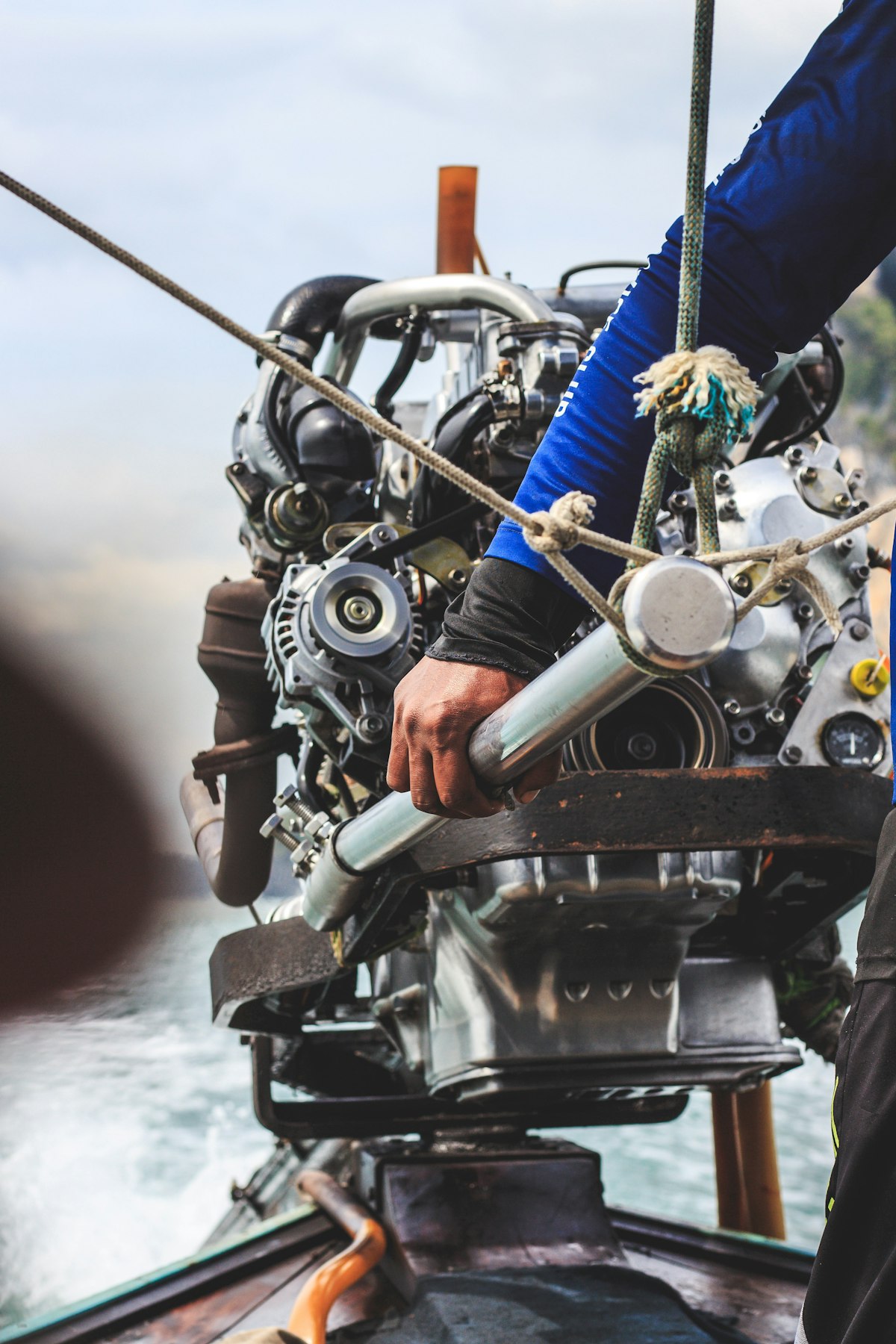
Open any boat equipment manual and you'll see maintenance recommendations that mix different interval types: "Change oil every 100 hours or annually, whichever comes first." "Inspect impeller annually." "Service transmission every 200 hours."
This creates a tracking challenge: some maintenance is time-based, some is usage-based, and critical items require both. Managing this complexity with paper logs or mental notes is nearly impossible.
Understanding the different reminder types and when to use each is fundamental to comprehensive maintenance tracking.
Time-Based Maintenance: The Calendar Approach
Time-based maintenance happens on calendar intervals regardless of usage:
When to use time-based tracking: Items that degrade over time even when not in use. Rubber components that dry and crack. Batteries that sulfate when stored. Anodes that corrode continuously. Fuel that degrades. These deteriorate whether you run the boat 10 hours or 100 hours annually.
Common time-based intervals: Winterization (annual), spring commissioning (annual), battery maintenance (quarterly), fuel stabilizer addition (seasonal), standing rigging inspection (every 5 years), through-hull inspection (annual).
The challenge: Time-based reminders are straightforward to implement—set a calendar reminder and you're done. But they ignore actual usage, which can lead to over-maintaining or under-maintaining based on how much you actually use the boat.
Usage-Based Maintenance: The Engine Hours Approach
Usage-based maintenance happens at specific engine hour intervals:
When to use usage-based tracking: Items that wear based on operation. Engine oil that accumulates combustion byproducts. Filters that load with contaminants. Impellers that flex with each pump cycle. Drive belts that accumulate running hours. These deteriorate based on usage, not time.
Common usage-based intervals: Oil changes (every 100 hours), fuel filter replacement (every 200 hours), transmission service (every 200 hours), impeller replacement (every 200 hours), valve adjustment (every 500 hours).
The challenge: Usage-based tracking requires knowing your current engine hours and having systems that trigger reminders at the right intervals. Manual tracking means constantly checking hour meters and calculating when service is due.
The Hybrid Approach: Combining Both
Manufacturers recommend hybrid intervals for good reason: "Every 100 hours or annually, whichever comes first." This protects against both heavy use and long storage periods.
Why hybrid matters: The boat used 200 hours annually needs oil changes twice per year based on usage. The boat used 30 hours annually still needs annual oil changes because oil degrades over time. Hybrid tracking ensures appropriate maintenance regardless of usage pattern.
Common hybrid intervals: Engine oil changes (100 hours or annual), impeller replacement (200 hours or annual), fuel filter replacement (200 hours or annual), coolant replacement (every 3 years or 300 hours).
The implementation: Effective hybrid tracking fires reminders when either condition is met—time elapsed or usage threshold reached. This requires systems that monitor both types of intervals simultaneously.
The Edge Cases
Some maintenance doesn't fit neatly into time or usage categories:
Condition-based maintenance: Inspect anodes and replace when 50% consumed. This requires visual inspection and judgment, but should be prompted by time-based reminders (annual inspection schedule).
Distance-based maintenance: For boat trailers, maintenance might be based on miles driven rather than engine hours. Wheel bearing repacking every 10,000 miles, tire replacement every 5 years or when tread depth is insufficient.
Cycle-based maintenance: Some items are based on cycles rather than hours. Anchor windlass service after each season of use. Bottom paint application annually regardless of hours in the water.
The Seasonal Complication
Seasonal boaters face additional complexity: winter storage creates a maintenance event that's time-based (annual) but also marks a break in usage tracking.
Winterization tasks are purely time-based. Spring commissioning tasks are also time-based. But ongoing maintenance during the season might be usage-based. The system needs to handle both patterns without confusion.
The Documentation Standard
Regardless of interval type, effective maintenance tracking requires consistent documentation:
What was done: Specific tasks completed, not just "service performed."
When it was done: Date and engine hours at time of service.
What was used: Parts, fluids, filters—specific products and quantities.
What was observed: Conditions noted during service that inform future maintenance decisions.
This documentation enables accurate interval tracking and reveals patterns that predict future maintenance needs.
The Automated Intelligence
Yachtero handles the full complexity of maintenance tracking: time-based reminders, usage-based triggers, hybrid intervals that fire on whichever condition hits first, and comprehensive documentation that maintains complete service history.
This isn't a basic calendar app with boat stickers. It's purpose-built for the specific interval patterns of marine equipment, where some systems are time-sensitive, others are usage-sensitive, and critical maintenance requires monitoring both simultaneously.
Understanding time-based versus usage-based maintenance is the foundation of comprehensive boat care. The right tracking system ensures nothing falls through the cracks regardless of how much—or how little—you use your boat.
Enhance Your Boating Experience
Unlock a more organized, efficient, and enjoyable boating experience with Yachtero. Download the app today and discover the benefits of AI-powered assistance. Register now and take control of your boat!