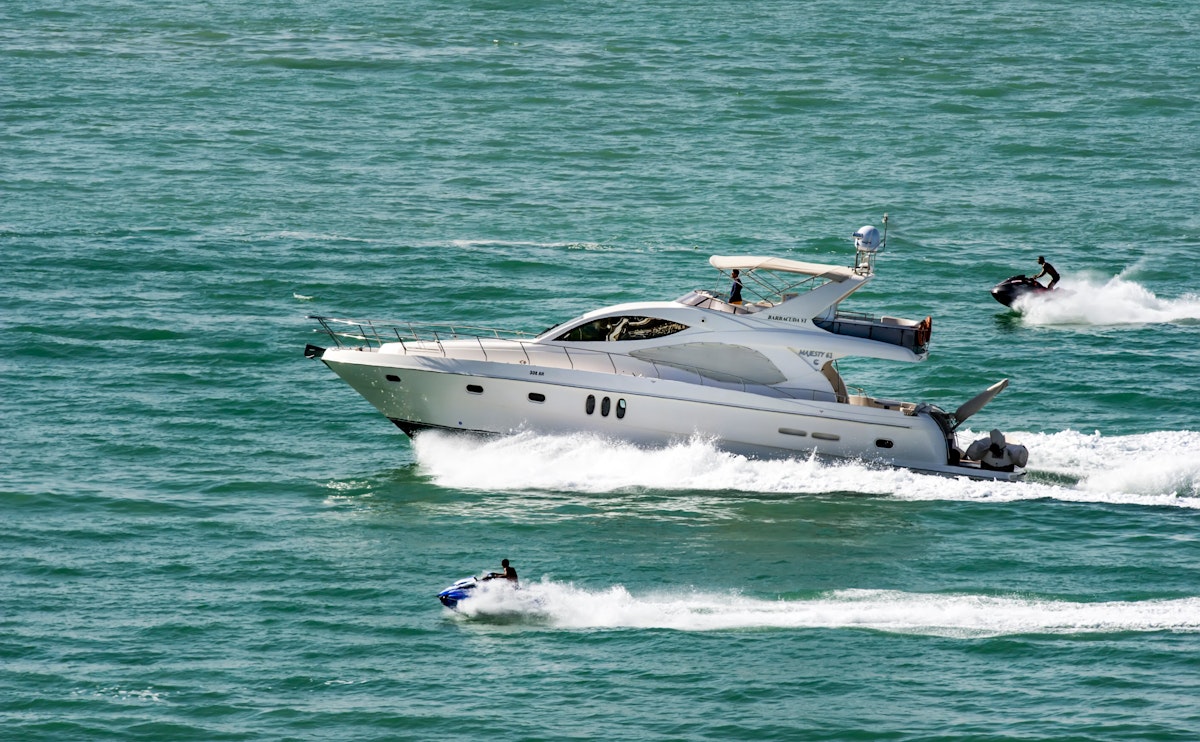
A boat owner shares access with co-owner, spouse, and service technician. Later discovers the technician viewed financial records (shouldn't have access), spouse accidentally deleted critical maintenance history (should be read-only for this function), and co-owner changed insurance policy without consultation (should require joint approval).
Sharing access without proper permissions and privacy controls creates security problems, accidental damage, and relationship conflicts. Protecting boat data while enabling collaboration requires thoughtful permission design.
Why Permissions and Privacy Matter
Boats accumulate valuable and sensitive information: Financial data (purchase price, loans, insurance costs, expense history worth thousands annually), Equipment inventory (serial numbers, values, installation details facilitating theft), Personal information (contact details, identification used for registration, personal documents), Service provider relationships (contact information, payment history, agreements), Usage patterns (when boat unattended, travel patterns, storage locations).
Inappropriate access creates: Privacy violations (financial info to inappropriate people), Security risks (equipment details enabling theft), Accidental damage (deletion of critical information), Unauthorized changes (modifications without appropriate authority), Relationship conflicts (violations of trust and boundaries).
The Least Privilege Principle
Security best practice: grant minimum access necessary for each person's role and responsibilities. Every person should have enough access to perform their legitimate functions, not more.
Start conservative, expand only if needed. Much easier to add permissions than revoke them (feels like punishment or loss of trust).
Information Categories and Sensitivity Levels
Different data types require different protection levels: Public: Boat name, make/model, general specifications (anyone can view). Internal: Service history, maintenance records, equipment details (crew can view). Confidential: Financial data, ownership documents, expense details (owners only). Restricted: Passwords, insurance policy numbers, loan information (owner only).
Role-Based Permission Architecture
Different crew roles need different information access: Owner: Unrestricted access to all information including most sensitive financial and legal data. Co-Owner: Full access except can't remove other co-owners or delete boat. Admin: Operational information and management but restricted financial details. Contributor: Can add information in their domain but limited viewing and no deletion. Read-Only: View selected information, no editing or financial access.
Financial Information Protection
Financial data is most sensitive: Boat purchase price and financing, Loan balances and payment schedules, Insurance costs and coverage limits, Total expense tracking and partner balances, Partner ownership percentages and investment amounts.
Restrict financial access: Owner and Co-Owner see all financial data, Admin might see operational expenses (slip fees, routine maintenance) but not ownership/loan information, Contributor and Read-Only see no financial information, Service providers see only their own invoices and payments.
Equipment and Security Information
Equipment details require protection for security: Complete equipment inventory with serial numbers (enables theft if accessed by wrong people), High-value equipment details (electronics, engines, expensive gear), Installation locations and access methods, Security system information (how to disable, monitoring details), Storage locations and keys/codes.
Allow viewing by: Owners and trusted crew who manage boat, Service providers only for equipment they're servicing, But exclude casual crew or read-only users who don't need complete inventory.
Document Access Controls
Sensitive documents require restricted access: Owner-only documents: Purchase agreement with price, Loan documents, Tax records, Personal identification copies. Owner/Co-Owner documents: Partnership agreement, Insurance policy, Registration and title, Survey reports, Warranties with coverage details. Wider crew access: Operating manuals, Safety checklists, Service history reports, Emergency contact lists.
Editing Permissions vs. Viewing Permissions
Separate view and edit permissions: Spouse might view all boat information but only edit certain areas (to prevent accidental deletion), Adult children might view equipment and history but not edit (read-only prevents mistakes), Service providers might edit service records they create but not others' work, Occasional crew might view safety information but edit nothing.
Preventing Accidental Deletion
Accidental data loss is common problem: Someone deletes maintenance record thinking it was duplicate, Service history gets cleared thinking it was clearing old notes, Equipment record deleted instead of edited, Critical photos removed by mistake.
Protection strategies: Only Owner and Co-Owner can delete most information, Contributor and Admin can add but not delete, "Are you sure?" confirmation for deletions, Trash/archive system allowing recovery of deleted items for 30 days, Activity logging showing who deleted what and when.
Unauthorized Change Prevention
Changes without appropriate authority cause conflicts: Co-owner modifies insurance policy without consulting other co-owner, Service provider changes equipment specifications incorrectly, Family member reschedules maintenance without informing responsible party, Someone updates financial information inappropriately.
Prevention through permissions: Critical changes require specific roles (insurance, registration changes = Owner/Co-Owner only), Service information editable by those who performed service, Financial entries require appropriate authority levels, Equipment specs locked after initial entry (prevent casual editing).
Activity Logging for Accountability
Comprehensive action logging protects privacy and enables problem resolution: Who viewed sensitive information (financial records, documents), Who added/modified/deleted information, Who invited or removed crew members, Who changed permissions or settings, When each action occurred.
Activity logs enable: Detecting inappropriate access ("Why did the mechanic view financial records?"), Identifying accidental deletion source ("Who deleted that maintenance record?"), Resolving disputes ("Check the log—Alex changed that on March 5th"), Deterring inappropriate behavior (people act more responsibly when actions are logged).
Privacy Zones for Different Relationships
Different relationships require different privacy boundaries: Business partners: Need financial transparency for fairness but might not want personal information visible. Spouse/family: Might have full access to boat information but financial information depends on relationship structure. Service providers: Need equipment and service history but definitely not financial or personal information. Friends/casual crew: Might want basic boat info (safety equipment, contacts) but not detailed history or finances.
Temporary Access and Time-Limited Permissions
Some situations require temporary elevated access: Surveyor needs detailed access for pre-purchase inspection (grant access for 2 weeks, revoke after), Insurance agent needs documentation for claim (temporary access to relevant information), Temporary service provider needs coordination access (revoke when job completes), Family member house-sitting needs emergency access (time-limited during your absence).
Communication Privacy
Partner communications might contain sensitive discussions: Financial disagreements, Partner performance concerns, Service provider quality issues, Private personal matters related to boat usage.
Consider: Owner/Co-Owner private communication channels (for sensitive partnership discussions), All-crew open channels (for general boat coordination), Direct messaging between specific people (not visible to others).
Third-Party Integration Privacy
If boat management platform integrates with other services: Control what information shares with integrated services, Review permissions requested by integrations, Understand who at third-party companies can access your data, Disable integrations when no longer needed.
Password and Authentication Security
Basic security hygiene for all crew: Strong unique passwords required, Two-factor authentication available (especially for Owner/Co-Owner accounts), Session timeout after inactivity (don't leave accounts open), Device management (ability to force logout from lost devices), Password change on crew removal (if shared accounts existed).
Regular Permission Audits
Review permissions every 6-12 months: Does everyone still need current access level?, Have any relationships changed requiring permission adjustments?, Are inactive crew still listed (remove if no longer relevant), Do permission levels match current partnership agreement?, Have any security incidents suggested permission tightening?
Handling Permission Disputes
Sometimes crew disagree about appropriate access: "Why can't I see financial information? I use the boat too!" "You removed my ability to delete—don't you trust me?" "The service provider shouldn't see that much information."
Resolution approach: Refer to partnership agreement (what was agreed about information access?), Explain security and privacy rationale ("Financial info restricted to owners for privacy and security"), Offer to adjust if legitimate need demonstrated ("If you need to manage expenses, let's discuss elevating your role"), Stand firm on appropriate boundaries (some restrictions are non-negotiable).
Data Portability and Exit
When relationships end, data ownership questions arise: Can exiting co-owner take complete data export?, What information should be deleted when service provider relationship ends?, Does removed crew retain access to information about their own contributions?
Clear policies: Owners can export complete data anytime, Exiting co-owners receive relevant data (financial records for their ownership period, information they personally contributed), Service providers don't retain client data after relationship ends, Removed crew lose access immediately but their contributions remain in system (attributed to them in history).
Privacy-Preserving Collaboration
Goal: Enable collaboration while protecting sensitive information: Share operational information broadly (maintenance, schedules, equipment specs), Restrict financial information appropriately (owners and possibly admin), Protect personal information (limit to need-to-know), Control editing permissions (prevent accidental or unauthorized changes), Log activity for accountability (transparent about who does what).
Platform Privacy Features
Look for platforms with robust permission and privacy controls: Granular role-based permissions, Separate view and edit permissions, Financial information protection, Activity logging for accountability, Document access controls, Easy permission management, Time-limited access capabilities, Two-factor authentication support.
Platforms like Yachtero implement comprehensive privacy controls: Five distinct role levels with appropriate permissions, Financial information restricted to Owner/Co-Owner, Document access configurable by sensitivity level, Complete activity logging showing all access and changes, Easy crew management with immediate permission changes, View-only options prevent accidental deletion, Secure authentication with session management.
The bottom line: Sharing boat access requires balancing collaboration with privacy protection. Implement role-based permissions granting minimum necessary access: Owner/Co-Owner for sensitive financial and legal information, Admin for operational management without full financial access, Contributor for adding information in specific domains, Read-Only for viewing without editing. Protect financial data, equipment details, sensitive documents, and personal information appropriately. Use activity logging for accountability. Review permissions regularly. Separate viewing and editing permissions to prevent accidental damage. Result: collaborative boat management that protects sensitive information, prevents unauthorized changes, maintains accountability, and builds trust through transparent, appropriate access controls.
Enhance Your Boating Experience
Unlock a more organized, efficient, and enjoyable boating experience with Yachtero. Download the app today and discover the benefits of AI-powered assistance. Register now and take control of your boat!