A marine service shop owner opens five different systems to understand business health: accounting software for revenue, spreadsheet for job tracking, email for client communications, phone records for time estimates, and mental math to guess profitability. After two hours of data gathering, they still can't confidently answer "Are we improving or declining?"
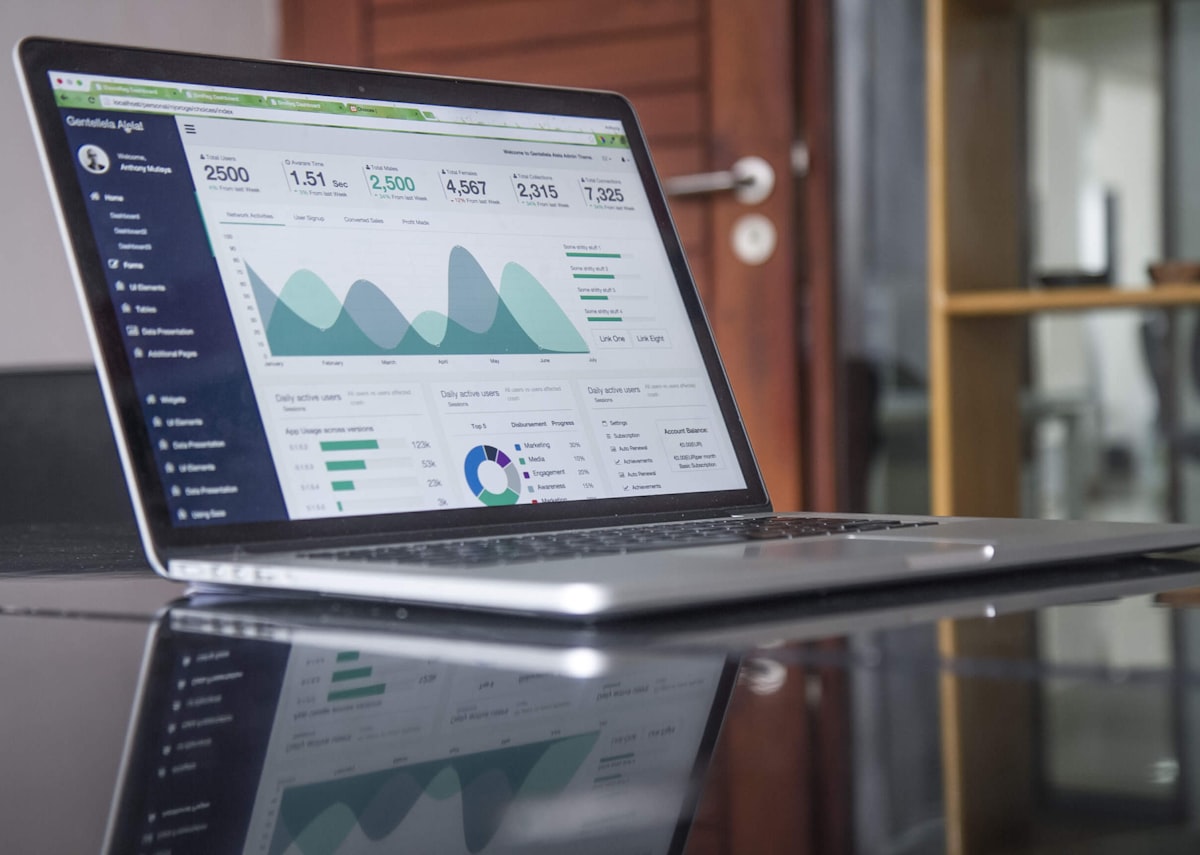
Business intelligence dashboards consolidate critical information in one visual interface. Elite shops review comprehensive dashboards weekly, spotting trends early, identifying opportunities quickly, and making data-driven decisions confidently. The difference between thriving and surviving often comes down to visibility.
What Business Intelligence Actually Means
Business intelligence (BI) isn't about complicated data science or expensive enterprise software. For marine service shops, BI means: collecting relevant business data systematically, organizing data to reveal patterns and trends, visualizing information for quick comprehension, and using insights to make better strategic decisions.
The goal is actionable insight, not data accumulation. Dashboards showing hundreds of metrics create information overload. Effective BI focuses on the 5-10 metrics that actually drive business decisions and reveal health trends.
Dashboard Structure: The Three-Section Approach
Effective marine service dashboards use three-section structure: Current Period Performance (this month's critical metrics), Trend Analysis (3-12 month trends showing direction), and Strategic Indicators (long-term health metrics and forward-looking indicators).
This structure provides complete temporal perspective. Current performance shows immediate status. Trends reveal whether you're improving or declining. Strategic indicators predict future challenges or opportunities. Together, they enable both tactical and strategic decision-making.
Section 1: Current Period Performance
The top dashboard section shows current month essentials: total revenue (month-to-date and projected month-end), jobs completed and in progress, net profit margin (actual based on tracked costs), capacity utilization (billable hours vs. available hours), and average job profitability.
Include comparison indicators showing performance relative to targets or previous periods: "Revenue: $42,500 (85% of target, ↓ 8% vs. last month)," "Net Margin: 24% (↑ 3% vs. last month)," "Capacity: 68% (↑ 5% vs. last month)." These indicators show not just current state but direction and relative performance.
Section 2: Trend Analysis
The middle section visualizes 3-12 month trends: revenue trend (are you growing, flat, or declining?), profitability trend (improving or eroding margins?), capacity utilization trend (busier or slower?), and client acquisition and retention trends.
Visual trend lines reveal patterns hard to see in raw numbers. A revenue chart showing steady 5% monthly decline for six months demands strategic attention even if current month looks acceptable. An improving profitability trend validates recent strategic changes.
Seasonal businesses should compare year-over-year trends rather than month-to-month. Your July revenue should compare to last July, not to June, to account for seasonal patterns. YoY trends reveal genuine business growth versus seasonal fluctuation.
Section 3: Strategic Indicators
The bottom section shows long-term health metrics: client lifetime value trends, client acquisition cost vs. LTV ratio, job type mix (percentage of revenue from different service categories), top client concentration (percentage of revenue from top 10 clients), and leading indicators like quote volume and close rates.
These metrics predict future performance. Rising quote volume suggests future busy periods. Improving close rates indicate effective selling or appropriate pricing. Declining LTV:CAC ratio warns of unsustainable growth spending. Strategic indicators help you prepare for future rather than reacting to present.
Key Performance Indicators (KPIs) Selection
Effective dashboards display carefully selected KPIs, not every possible metric. Core marine service KPIs include: revenue (absolute dollars and trends), net profit margin (percentage and dollar amounts), capacity utilization (percentage of available time generating revenue), revenue per billable hour (efficiency indicator), and client metrics (acquisition, retention, lifetime value).
Avoid vanity metrics that look impressive but don't drive decisions. Total client count is less meaningful than active client count or high-LTV client count. Total jobs completed matters less than profitable jobs completed. Focus on metrics that guide strategic action.
Dashboard Design Principles
Effective dashboards follow proven design principles: visual clarity (charts and graphs over tables of numbers), information hierarchy (most important metrics prominent, supporting details accessible but not dominant), consistent formatting (same color schemes, chart types, and layouts), and mobile-friendly (readable on phone screens, not just desktop monitors).
Use color strategically: green for positive/on-target metrics, red for concerning/below-target metrics, yellow for watch-carefully situations, and neutral colors for informational data. Color-coding enables quick assessment—you should understand dashboard status in 30 seconds of viewing.
Weekly Dashboard Review Discipline
Dashboards only provide value if actually reviewed regularly. Implement weekly dashboard review discipline: schedule consistent review time (Monday morning, Friday afternoon), review all three sections systematically, note concerning trends or positive developments, and identify actions required based on data.
Document action items from reviews: "Net margin declining—investigate job costing on recent engine work," "Capacity utilization at 82%—prepare for potential need to raise prices or expand capacity," "Close rate dropped from 65% to 52%—review recent lost estimates for patterns."
Using Dashboards for Strategic Decisions
Dashboards transform strategic decision-making: pricing changes based on margin trends and capacity data, service offering adjustments based on profitability by job type, marketing investment decisions based on CAC vs. LTV analysis, and capacity planning based on utilization trends and forward indicators.
The power is evidence-based decisions replacing gut feelings. Instead of "I think we need to raise prices," you say "Dashboard shows 68% capacity utilization with declining margins—data supports strategic price increases." Data-backed decisions generate confidence and commitment.
Integrated Dashboard Platforms
Building custom dashboards from scattered data sources is complex and time-consuming. Many shops start with spreadsheet-based dashboards that work initially but become burdensome to maintain. Updated weekly manually, they often fall behind during busy periods.
Modern marine service platforms like Yachtero provide built-in business intelligence dashboards. As you complete jobs, log time, record costs, and manage clients, the system automatically updates dashboard metrics. Revenue, profitability, capacity utilization, client analytics—all calculated in real-time from your normal workflow data.
The platform provides instant visibility without manual effort: current period performance updates continuously, trend charts reflect latest data automatically, strategic indicators calculate based on accumulated history, and mobile access provides dashboard visibility anywhere. Strategic business management becomes effortless rather than time-consuming data compilation.
The bottom line: Business intelligence dashboards consolidate critical metrics in visual format enabling quick assessment and strategic decision-making. Structure dashboards in three sections: current performance, trend analysis, strategic indicators. Focus on 5-10 KPIs that actually drive decisions. Review weekly with disciplined routine. Use insights for data-driven strategic planning.

Enhance Your Boating Experience
Unlock a more organized, efficient, and enjoyable boating experience with Yachtero. Download the app today and discover the benefits of AI-powered assistance. Register now and take control of your boat!